

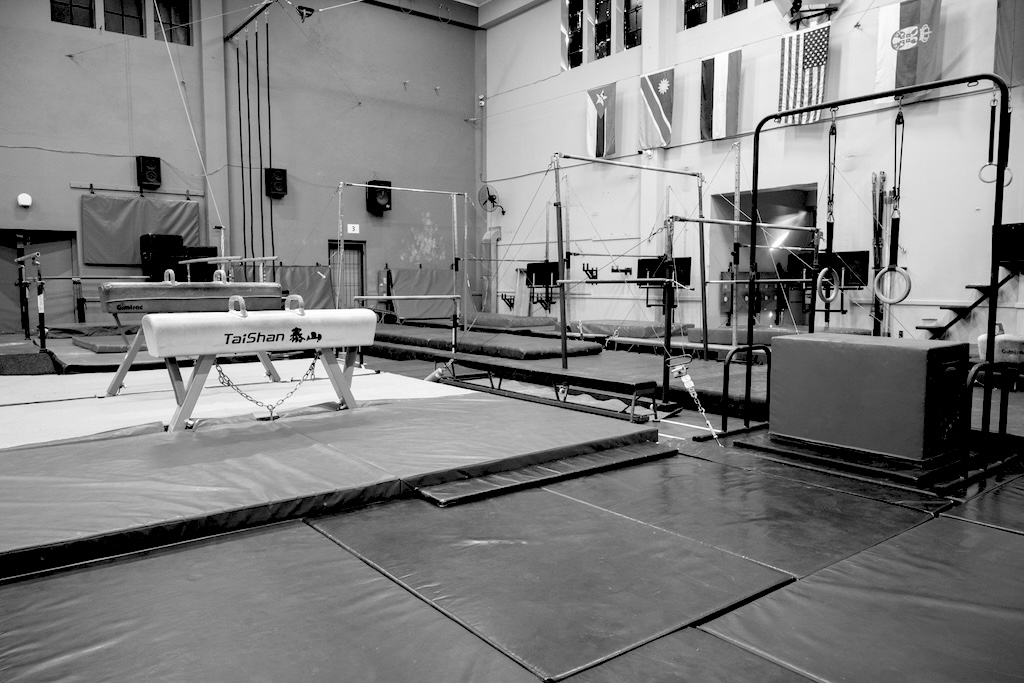
There’s a particular kind of knowledge that only comes from standing on a gym floor for decades.
Not the kind you read about. Not the kind you present in a boardroom or summarise in a report. The kind that lives in your hands when you spot a child through a skill they’ve been afraid of for three months. The kind that knows, before the child does, that they’re ready.
I’ve spent most of my career in that space. Coaching. Judging. Building training programmes from the ground up. And if there’s one thing that space has taught me, it’s this: gymnastics doesn’t just train bodies. It trains people.
What We’re Actually Teaching
When a child walks into a gymnastics gym, they think they’re learning to cartwheel. To balance. To tumble. And they are. But that’s not the whole story.
What they’re really learning is how to listen. How to receive an instruction, process it, and apply it with their body. How to repeat something uncomfortable until it becomes second nature. How to fail in front of others and come back the next week anyway.
These are not gymnastics skills. They are life skills. And they are forged through the particular alchemy of structured physical training — repetition, patience, and the discipline of doing the hard parts until you improve.
The body and the brain train together. That’s not a coaching philosophy. That’s biology. And the patterns it builds don’t stay in the gym. They follow a child into the classroom, into relationships, into how they handle pressure as adults.
The Longest Conversation in African Sport
Wanderers Gymnastics Centre has been having this conversation longer than any other gymnastics club on the continent. That’s not a boast — it’s a responsibility.
When an institution carries that kind of history, it carries something else with it: proof. Proof that this approach works. That consistency compounds. That the child who learned to listen on the gym floor at eight years old becomes something more at eighteen, at twenty-eight, at thirty-eight.
Parents who bring their children to us understand this intuitively. They’re not looking for entertainment. They’re not filling an afternoon. They are making a deliberate investment in their child’s development — and they expect a return that outlasts the sport itself.
That’s the standard we hold ourselves to.
Seriousness Is Not the Enemy of Joy
There’s a misconception worth addressing. That structured, standards-driven environments are somehow at odds with children enjoying themselves. That rigour and warmth can’t coexist.
They can. They must.
The best coaching environments I’ve witnessed — and the one we strive to build at Wanderers — are serious about standards precisely because they care about children. Because low expectations dressed up as kindness don’t serve anyone. Because a child who is never challenged never discovers what they’re capable of.
Joy and discipline are not opposites. In gymnastics, they are partners. The joy of landing something you’ve been working on for weeks is only possible because of the discipline that preceded it.
A Word for South African Sport
Building serious sport pathways in this country is not a simple task. Resources are uneven. Awareness is patchy. The long-term view is often crowded out by short-term pressures.
But there are people doing the work. Coaches on gym floors, in school halls, on athletics tracks and swimming pools across this country who understand that developing young people through sport is one of the most important investments a society can make.
That work deserves more visibility. More conversation. More honest engagement with what it actually takes.
That’s what I intend to do here. Not because I’ve suddenly become someone who posts online — but because the conversation is worth having.
And there’s a lot to talk about.
Bobby Budai is the Director of Wanderers Gymnastics Centre, the longest-practising gymnastics club in Africa, based in Johannesburg.

Hi, this is a comment.
To get started with moderating, editing, and deleting comments, please visit the Comments screen in the dashboard.
Commenter avatars come from Gravatar.