Some institutions are built for a moment. Others are built for generations. Wanderers Gymnastics Centre is the latter.
There is something quietly extraordinary about an institution that outlasts the world it was born into.
When Wanderers Gymnastics Centre was established in 1888, Johannesburg was barely two years old. The city that would become the economic heartbeat of an entire continent was still finding its shape — a raw, ambitious settlement built on the promise of gold, full of people who had arrived from elsewhere and were building something from nothing.
In that environment, five sporting clubs came together to form what would become The Wanderers Club. Gymnastics was one of them. Not an afterthought. Not a later addition. A founding pillar.
More than 135 years later, we are still here.
To Understand Where We Are, You Have to Know Where We Started
1888 is not just a date. It is a statement about what gymnastics meant to the people who built this club.
In the late nineteenth century, gymnastics was not the televised spectacle of Olympic floor routines and vaulting highlights that most people picture today. It was understood, in the tradition of its European origins, as a foundational physical discipline — a systematic approach to developing the human body and, through the body, the character.
The men and women who included gymnastics among the founding codes of The Wanderers Club were not building a hobby. They were building an institution with a specific philosophy: that physical training, properly conducted, develops people in ways that matter beyond sport.
That philosophy has never left this club. It has been carried forward by every coach, every administrator, and every child who has passed through our doors across thirteen decades. It is the thread that connects 1888 to today — not nostalgia, but a living commitment to an idea that has proven itself, repeatedly, across generations of Johannesburg families.
The Longest Conversation in African Gymnastics
Wanderers Gymnastics Centre is the longest-practising gymnastics club in Africa.
That is a fact worth pausing on. Not because records exist to be boasted about, but because longevity in sport is not an accident. Clubs that endure do so because they offer something real — something that communities return to, generation after generation, because it works.
Over more than a century of operation, we have seen the city around us transform beyond recognition. Johannesburg has expanded, contracted, reinvented itself, and expanded again. Political landscapes have shifted. Economic conditions have changed. The sporting codes that surround us have evolved. Through all of it, the club has remained.
Thousands of young people have trained here. Children who are now grandparents. Parents whose own parents trained in this same facility. Coaches who began as students and never fully left. The continuity is not incidental — it is the product of a community that has chosen, repeatedly, to maintain this institution because they believe in what it does.
That is not something that can be manufactured. It is something that is built slowly, over time, through consistent delivery on a promise. At Wanderers, that promise has always been the same: we will develop your child properly.
What Has Changed, and What Has Not
To be clear about what longevity means at Wanderers, it is worth being honest about both sides of that story.
What has changed is everything that should change. Training methodology has evolved with the science of child development and sports performance. Equipment has been updated. Our understanding of how children learn, how bodies develop, and how coaching should be delivered has grown substantially over the course of more than a century. A gymnastics programme frozen in 1888 would serve no one well today, and that has never been our approach.
What has not changed is the philosophy. The belief that gymnastics develops children properly — physically, mentally, and in character — is as central to this club today as it was at its founding. The commitment to high standards, to patient progression, to an environment where children are taken seriously and developed with care — these have not been diluted by time or trend.
This is, perhaps, the defining characteristic of an institution with genuine heritage: the ability to evolve in method while remaining anchored in purpose.
The Coaches Who Carried the Club Forward
Institutions do not sustain themselves. People do.
The history of Wanderers Gymnastics Centre is, at its core, a history of coaches — men and women who devoted significant portions of their lives to this club and to the children who came through it. Coaches who trained here as children and returned as adults to give back what they had received. Coaches who brought knowledge from elsewhere and built it into the programme. Coaches who stayed when it would have been easier to leave, because they believed in what the club stood for.
This is the invisible infrastructure of any great sporting institution. Not the trophies or the records — though there are those too — but the accumulated knowledge, care, and commitment of the people who showed up, year after year, and did the work.
At Wanderers today, that tradition of coaching continuity is something we protect deliberately. The knowledge that passes from experienced coach to developing coach, from one generation of leadership to the next, carries within it something that cannot be written in a manual or replicated by a newcomer without roots. It carries the particular wisdom of a club that has seen enough to know what actually works, over time, for real children.
The Families Who Kept Coming Back
If the coaches are the invisible infrastructure of Wanderers, the families are its foundation.
Across more than a century, the families of Johannesburg have chosen this club for their children. In some cases, that choice has been made across multiple generations — parents enrolling their children in the same club where they themselves learned to balance, to roll, to trust a coach and try something frightening.
This kind of generational loyalty is not given. It is earned, continuously, by delivering on the promise that brought the first family through the door. It is the most honest measure of an institution’s performance over time.
When a parent who trained here as a child brings their own child to Wanderers, they are not doing so out of sentiment alone. They are doing so because they remember what the experience gave them. The strength. The discipline. The confidence. The particular satisfaction of learning to do something hard and doing it well. And they want that for their child.
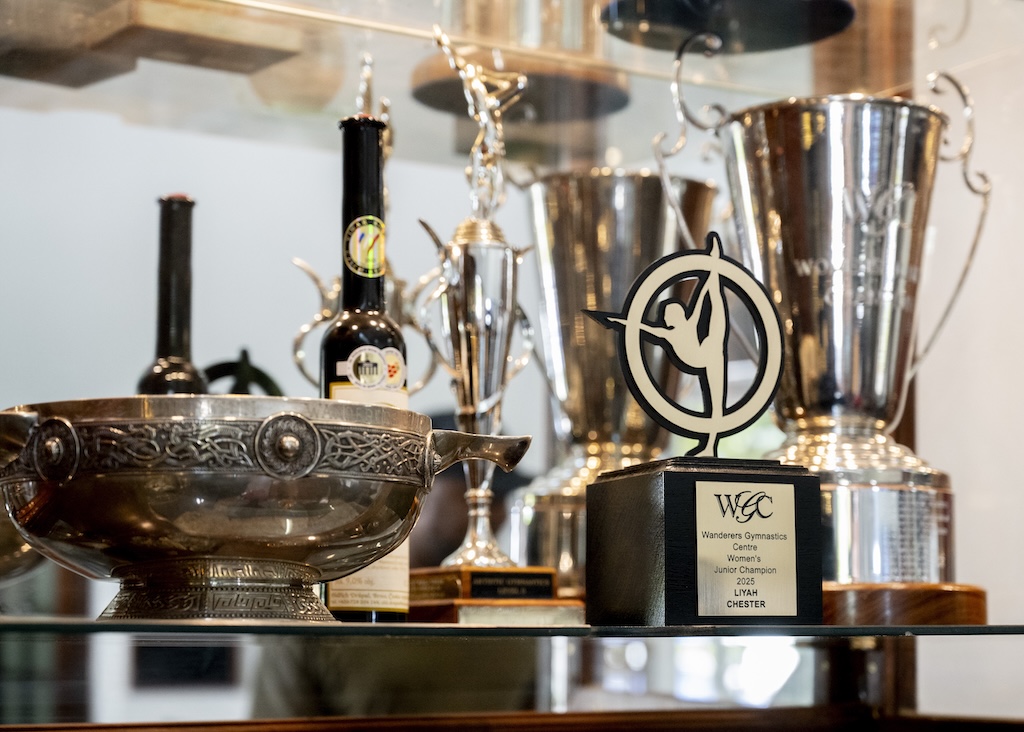
That is the real story of this club. Not 1888. Not the records or the titles or the continental distinction of being Africa’s longest-practising gymnastics institution. The real story is the thousands of individual children who left this club more capable, more confident, and more developed than when they arrived — and the families who trusted us with that responsibility.
What Heritage Actually Means
Heritage is a word that gets used loosely. It can become a comfort blanket for institutions that have stopped growing, a way of trading on past reputation while coasting in the present.
That is not what heritage means at Wanderers.
Here, more than a century of history is not an achievement to rest on. It is a standard to be maintained. Every child who trains here is, in a real sense, part of a lineage that stretches back to the founding of this city. The standards we hold, the care we bring, the seriousness with which we approach the development of every child who walks through our doors — these are not new commitments. They are old ones, renewed every day.
The weight of that history is not a burden. It is a privilege. And it is one that every coach, every administrator, and every family who chooses Wanderers carries with them.
The Next Chapter
More than 135 years is a long time. But it is also, in the life of a living institution, just the beginning of the next chapter.
The children who are training at Wanderers today are writing that chapter. They are the next generation of the story — the thousands who will, in time, look back on their years at this club and understand what it gave them. Some of them will bring their own children here. Some will go on to compete at national and international level. Some will carry what they learned into fields that have nothing to do with gymnastics.
All of them will carry something. That is what this club has always produced, and what it intends to keep producing.
The gym floor has been here for over a century. It will be here long after all of us. And the work that happens on it — the quiet, consistent, serious work of developing young people properly — is as important today as it was in 1888.
Some things are worth building to last.
Wanderers Gymnastics Centre has been developing young people in Johannesburg since 1888, making it the longest-practising gymnastics club in Africa. We offer structured gymnastics programmes for children from age 4, with coaching built on over a century of expertise and commitment. Come and be part of the story.
